Planning and Selecting Bulbs
Plan for bloom time, color, and plant height when planning your bulb gardens. The quality of the bulbs you buy and the planting location and care will be just as important.
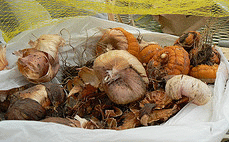
Since the flower bud already exists in the bulb you purchase it is important the bulb be of top quality. It should be firm, plump and heavy for its’ size, with no visible damage such as cuts and bruises. Minor nicks are to be expected. Soft spots indicate decay or disease, but also check for the odor of decay. Usually, the larger bulbs produce larger blooms. Ideally bulbs should be purchased locally allowing you to inspect them. Look for bulbs graded “top size”. If you use mail or internet order, make sure the nursery is known for quality or has been referred by a trusted gardener. Store your bulbs in a cool dark place, about 50 - 60 degrees F, if they cannot be planted immediately.
There are so many interesting ways to use bulbs besides the old reliable mass of tulips, which does have great visual impact. But consider other possibilities when planning for bulbs, there are several ideas on the next page. Remember that most bulbs require a sunny well drained location to be healthy and live a long life, but don’t forget that shade patterns can be dramatically different in your gardens from spring to mid summer. Then choose from the many many varieties based on bloom time, color, height, and even foliage. For example, the spiky fans of the iris may be perfect in your spring garden design while waiting for the blooms. Don’t forget about easy care summer bulbs, including rhizomes, tubers, and fibrous root bulbs. There are even a couple of fall blooming bulbs hardy enough for the Midwest. A reminder to all gardeners, some hybrid tulips will not come back every year!
Perennialize or Naturalize?
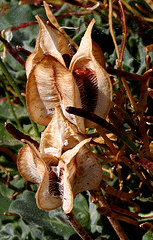
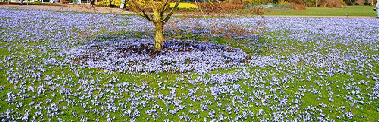
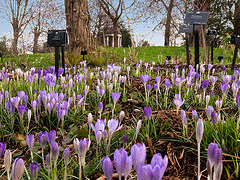
Many gardeners treat these two terms as synonymous. Although they are not quite the same, both will get better every year. Perennialize means that the bulb will grow and rebloom for several years. New bulbs will be formed, increasing the size of the clump and eventually may benefit from dividing. Naturalize means that the flowers also set seed, multiplying somewhat more quickly. Bulbs to naturalize are ideal for ground cover or to fill large open spaces. There are also certain varieties that fade after the first year, requiring replanting every one to three years. These are usually cross bred and hybridized bulbs and will NOT state “good for perennializing” or “good for naturalizing” on the package..
Here is a starter list of bulbs well suited to perennialize or naturalize, either type is generally good for gardening, but to truly naturalize bulbs, make sure you get something well suited. There are many many more, so check your local nurseries for bulbs that do well in your zone.
Bulbs for perennializing:
Allium ‘Purple Sensation’
Allium schuberti
Allium ‘Globemaster’
Crocus chrysanthus
Most Daffodils
Hyacinth
Darwin Hybrid Tulips - multiply very rapidly
Bulbs for naturalizing:
Crocus sieberi ‘Violet Queen’
Most Daffodils
Daylily
Iris
Muscari (Grape Hyacinth)
Scilla siberica
Darwin Hybrid Tulips - multiply very rapidly
EmperorTulips
Wild Tulips
Wood Hyacinth
‘Munchin Mix’ Tulips
Be sure to select bulbs hardy enough for your zone. Most bulbs will require full sun to bloom well, but some will take partial shade. Choose varieties suited to the planting site. If you are in region that experiences high winds, choose a short variety to minimize breakage. If heat sets in early in your region, a late blooming variety may not bloom very long. Colder regions will avoid late spring freeze damage by choosing late blooming varieties.