growing roses in shade
Before getting into the roses that will do well with some shade, it is important to define shade and understand the shade environment. It is also important to understand what a rose accomplishes with the sunshine it receives so that you can decide if you are willing to live with certain attributes being diminished by the shade
Study your shaded area over an entire season before planting roses. In mid season when the sun is high overhead, many areas of your landscape receive sun for long periods. When the sun is low in spring and fall, many of those areas receive little or no sun. Your rose will need the minimum required hours of daily sun through the entire season to perform well at all.
Shaded areas are generally also dry areas. The shade is created by trees or large shrubs that quickly drain the surrounding soil of water and nutrients. Trying to provide adequate water for a rose is sometimes difficult, as a large tree will soak it up faster than your rose can. When you plant a rose in shade, it is helpful to apply a good mulch around the plant to help the soil retain moisture. Use a heavy layer of newspaper topped with compost or aged manure. Bark mulch robs nitrogen from the soil as it decomposes, and a rose in the shade and competing with large plants or trees will need all the nitrogen it can get. The compost or manure will also add natural nutrients to the soil for your rose.
Trees in particular, have an extensive root system that is at least as wide as the crown of the tree, and often their reach is much greater. The roots may compete for space in addition to moisture and nutrients with your rose root system. The rose may have great difficulty establishing and expanding its roots, particularly in the first year. Generally you should plant at least 2 feet from the trunk. If you are trying to grow roses under a tree with large surface roots, it may be best to grow the roses in pots. Do not build up the soil around the tree and cover the roots in order to provide sufficient soil for a rose or any plant. The roots are at the surface to access air, burying them will prevent that and perhaps damage your tree.
Sunlight is essential for roses to grow and to bloom. The amount of sunlight your plant receives will affect the health, growth vigor and blooming of the rose. Part shade is considered dappled sunlight or 4 to 5 hours of sunlight. In part shade your rose will grow tall and less dense. The limbs will grow long and “leggy” reaching for the sun. The problem is minimized with the more adaptable roses. Reducing the plant height by pruning cane length will encourage more dense growth. Cane length can be reduced by as much as two thirds for shrub roses in very early spring while still dormant. Additional pruning to shape can be done when blooming is done. If your rose blooms on old wood, prune to shape immediately after blooming only so the wood can grow and establish for next year’s bloom.
Blooming is most directly affected by the amount of sunlight the rose receives. Every aspect, amount of blooms, frequency of blooming, and the size of the bloom are all affected. Even the petal color may be affected by the amount of sunlight. Acceptable blooming can really only be achieved with 4 to 5 hours of direct sunlight. The most shade tolerant roses may bloom adequately with 3 to 4 hours of direct sunlight. It should not be dappled or very early morning sun.
Here are a few rose characteristics that make a rose more adaptable to shade:
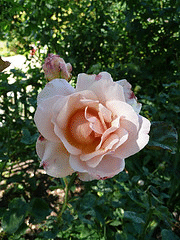
Single roses, with the fewest petals, generally bloom better than those with more than 12 petals.
Once flowering shrub roses put all their energy toward a single flush of blooming and will do fairly well in part shade.
English Roses will do quite well with at least 4 to 5 hours of direct sunlight, even though the blooms are full and often repeat bloomers. However, they will not be happy competing with other roots for moisture and nutrients.
Roses closest to a true species, with little or no hybridization, may be more adaptable. Notably, old garden roses such as gallicas, damasks and albas. Also the rugosa roses and China roses are shade adaptable, even though they rebloom, since they are naturally recurrent bloomers.
So, try to stay away from multi-flowering, multi-petaled roses for best success in shade. If you do try the repeating or continuous bloom hybrids, just be prepared to sacrifice some blooming. But sometimes there is just no predicting why certain roses will do well in shade, every garden environment is somewhat different. A prolific blooming floribunda or spray rose may still produce plenty of blooms. The following page lists specific roses that many gardeners have grown fairly well in part shade. There are advantages to growing roses in shade, both the blooms and the fragrance will last longer than in full sun.