Prepare Evergreens for Winter
Especially for evergreens, it is very important to prepare them for winter. First be sure they have received proper fall watering and fertilizing, see Preparing Plants for Winter
Evergreen Protection
As already mentioned, the most important thing you can do to protect your evergreens is to supply them with enough water going into winter. However, some varieties of evergreen, Alberta Spruce for one, are more susceptible to winter injury, and you may want to provide extra protection. Remember that you are not trying to keep your evergreens warm, but rather protect them from damaging winter sun and wind.

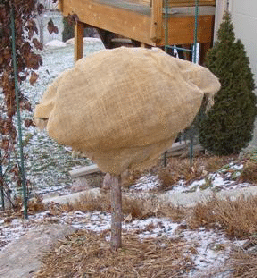
Evergreens can be wrapped in burlap to protect from sun and wind, leaving the top open to allow light in. Wrapping can also protect evergreens from street salt drift. Other wrapping material is used by some gardeners, even paper filled with straw. But a wrap that “breaths” and allows light and water in is generally considered best, such as burlap or floating row cover fabric. NEVER use plastic, which can seriously damage or kill the plant. Some gardeners use styrofoam or polyethylene sheets, but I don’t believe they breathe enough. There is some disagreement among gardeners regarding wrapping. Some insist this method harms more than helps, and prefer to erect a screen of sorts to block the sun and wind. In any case, the best and most attractive solution is to buy hardy plants that resist sun scald and wind burn, then plant in a location that provides some protection from the worst elements. Give them plenty of water, potassium and phosphate but NOT NITROGEN in the fall. Finally, spray with an anti-transpirant or anti-dessicant.

To install a screen, stakes are installed around the plant, and the burlap or canvas is stretched across the stakes. This protects the plant from wind and shades it from the sun. This is an excellent method for tall columnar or pyramid evergreens that don’t typically get completely covered with snow. Covering low growing evergreens with burlap is a good backup if you don’t get enough snow cover. In my experience, simply loosely covering the entire plant with burlap and weighting or staking down the corners works just fine. The burlap available at gardens centers has a very open weave (large holes) to allow air in, and moisture if it is available. Nature’s protection, snow, that covers plants entirely offers the very best protection against winter sun and wind. Carefully selecting the planting site can help protect evergreens that are most susceptible to winter damage. Plant on the North or East side of a structure or screen of hardy evergreens or shrubs to protect them from winter sun and wind. But be sure the site allows adequate summer sun to thrive.

Heavily branched evergreens can sometimes become laden with heavy snow and ice. There are a number of gardeners who “tie up” their evergreens to prevent damage from the weight. Apparently these gardeners have experienced damage and breakage by that weight. My evergreens have never yet been damaged or broken by snow and ice even up in zone 4, where we can get an awful lot of snow, and so I believe this to be unnecessary in most areas. There are, however, areas around the Great Lakes, Buffalo, parts of Michigan and Canada, etc., that receive unimaginable depths of snow some years. It may be very worthwhile if you live in such an area. As your evergreens become larger the branches open up more, and the potential for damage may be increased. But of course then it gets much more difficult to tie up to the top. Tie heavy twine to the base of the plant, and wind it up and around the plant in a spiral to pull in and fix the branches. When you get to the top, wind back down to the base. Do not wrap it up tightly, allow some air circulation. This method of protection is advised for multi branched evergreens such as yew, arborvitae and juniper.
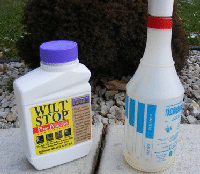
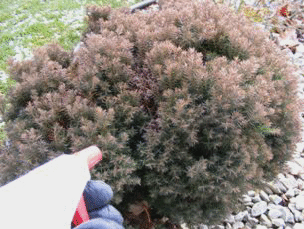
Both narrow leafed (needles) and broad leafed evergreens lose moisture through their leaves in winter. Moisture cannot be pulled from frozen soil by the plant, so the leaves turn brown and drop if excessive drying occurs. Applying an anti-transpirant or anti-desiccant (such as Wilt-Pruf or Wilt Stop) can help reduce moisture loss. For larger evergreens, use a garden pump sprayer to apply. Apply twice in winter sometime in December and February. Don’t forget your broadleaf evergreens! Evergreen Azalea, Rhododendron, Boxwood and Holly will all benefit from an anti-transpirant.
How to use burlap or row cover fabric to protect plants

This evergreen was severely desiccated last winter and has not fully recovered yet. It is critical that it further damage be prevented or the plant may not survive. Here a screen is easily constructed from a fold up tomato cage. Open up the cage and push into the ground around the evergreen. Be sure to place the screen where it will block the most damaging afternoon sun and winter winds. Cut a length of burlap from a roll purchased from your garden center. Secure the burlap to each end of the cage using clothes pins. The tomato cage is less invasive to roots in your garden bed than stakes would be, and gives your tomato cage a winter purpose


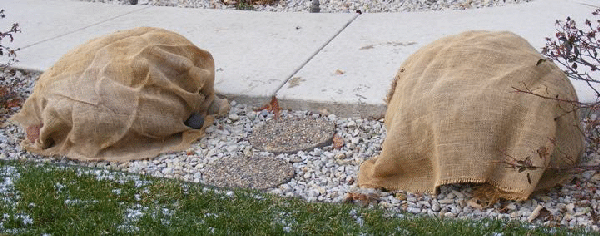
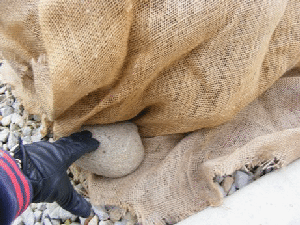
When covering or wrapping plants, wait for the ground to freeze and devise the simplest method to cover your plants that will hold the wrapping secure. These low growing ‘Teddy’ arborvitae will be covered with snow soon, which provides its’ own protection. But when the snow begins to melt in spring, sun, reflection, wind and freeze thaw cycles do a lot of damage. Last winter I failed to cover them and they still have not recovered from severe burn. These dwarf plants are small and low enough to simply cover with a piece of burlap and anchor with stones to hold in place until the snow covers them. This simple method has protected them well previously, so it was foolish last fall not to spend the 5 minutes it takes to cover them. Because of the existing damage I also sprayed them with anti-transpirant before covering.
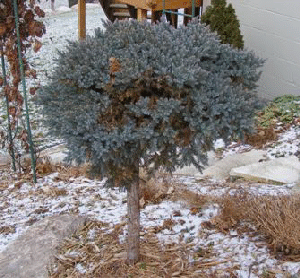
Although this ‘Blue Star’ Juniper is pretty hardy and resilient, it is exposed to late afternoon sun and the northwest winds. Since the evergreen is trained on a standard it is never protected by snow, so another 5 minutes to wrap it in burlap will prevent the minimal damage it might otherwise sustain. Damage from last winter is still evident. The burlap wrapping is secured with twine. Note that the wrap is draped and secured loosely so as not to crowd or damage branches, but secure enough to prevent strong winds from removing it.