Polyantha Roses
The Polyantha roses are typically small and compact or spreading, perfect candidates for planting in containers, small spaces, and borders. Polyantha roses are often referred to as “Old Roses” or “Antique Roses” .
Polyantha ‘Baby Faraux’
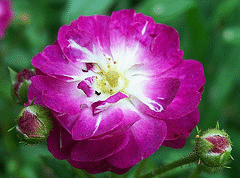
- Class: Shrub rose
- Sun: Full sun, will tolerate part shade
- Height: 1-2’
- Spread: 1- 1 1/2’’
- Growth Habit: Compact, shrubby
- Bloom Color: Mauve purple blend with white centers
- Flower Form: Double
- Flower Size: Small, 1”
- Petal Count: 17-25
- Bloom Season: Repeats in flushes
- Fragrance: Mild grape fragrance
- Stem: Nearly thornless
- Foliage: Dark green leathery
- Disease Resistance: Good resistance to disease and blackspot
- Soil: Enriched well drained
- Hardiness: zones 5b - 10b
‘Baby Faraux’ is a ‘Ballerina’ hybrid. The blooms appear continuously in large clusters. The dwarf shrub performs wonderfully as a potted rose. For best color, supply with plenty of iron. When doing spring pruning, cut back canes by a third in warmer regions. In the Midwest reduce canes by up to half.
Polyantha ‘Cecile Brunner’

- Class: Shrub rose
- Sun: Full sun, will tolerate partial shade
- Height: 3-4’
- Spread: 3-4’
- Growth Habit: Compact
- Bloom Color: Silvery pink
- Flower Form: Double, classic hybrid tea look
- Flower Size: Small, 1 1/2’ - 2” blooms in large sprays
- Petal Count: 17-30
- Bloom Season: Continuous, Mid Spring to frost
- Fragrance: Lightly sweet fragrance
- Stem: Nearly thornless
- Foliage: Dark green, somewhat shiny
- Disease Resistance: Good resistance to disease and blackspot
- Soil: Prefers enriched well drained, tolerates poor soil
- Hardiness: zones 5-9

‘Cecile Brunner’ is commonly known as the Sweatheart rose. The blooms form like a hybrid tea rose with high centers in a beautiful silvery pink with warm pink centers. Bloom trusses bear twelve blooms. Although some shade is tolerated, best blooming and disease resistance occurs in full sun. The growth habit is well branched and compact, making ‘Cecile Brunner’ a striking dense hedge or specimen. This is a very healthy, easy to grow rose and is one of the longest living of the shrub roses. (NOTE: The ‘Improved Cecile Brunner’ is NOT a polyantha and is not related to the ‘Mme. Cecile Brunner’ except that they look somewhat similar. The ‘Improved Cecile Brunner’ is a floribunda rose.)
Polyantha ‘Cecile Brunner Climbing’

- Class: Climbing Rose
- Sun: Full sun, will tolerate partial shade
- Height: 20-25’
- Spread: 20’
- Growth Habit: Bushy climber with a spreading habit
- Bloom Color: Silvery pink
- Flower Form: Double, classic hybrid tea look
- Flower Size: Small, 1 1/2” - 2” blooms in large sprays
- Petal Count: 17-30
- Bloom Season: Mid summer
- Fragrance: Lightly sweet fragrance
- Stem: Nearly thornless
- Foliage: Dark green, new leaves emerge red
- Disease Resistance: Good resistance to disease and blackspot
- Soil: Prefers enriched well drained, tolerates poor soil
- Hardiness: zones 6-9

The ‘Cecile Brunner’ climbing rose is very common in California, growing easily and vigorously in San Francisco’s foggy climate. The leaf and flower is somewhat larger than the ‘Cecile Brunner’ shrub rose, and does not flower as prolifically as the shrub rose. One full flush in midsummer is followed by sporatic blooms the rest of the season. Blooms open a warm pink and fade to buff as they mature. Although some shade is tolerated, best blooming and disease resistance occurs in full sun.
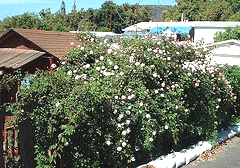
The climber grows very large, quickly overtaking a structure. Although it responds well to pruning, it is best left to assume its’ natural graceful form. The first two or three years may produce limited flowering. Once established, remove one or two of the oldest canes each spring to increase flower production. The foliage should rarely if ever need spraying. There may be some success growing this climber in zone 5 as well as zone 10. Note that an everblooming variety is available, although may be difficult to find.
Polyantha ‘China Doll’

- Class: Shrub rose
- Sun: Full sun, will tolerate part shade
- Height: 1-3’
- Spread: 1-3’
- Growth Habit: Compact, spreading in clumps
- Bloom Color: China rose pink
- Flower Form: Double pom-pom
- Flower Size: Small, 1 1/2”-2”
- Petal Count: 25
- Bloom Season: Continuous
- Fragrance: Little to no fragrance
- Stem: Nearly thornless
- Foliage: Dark green leathery
- Disease Resistance: Good resistance to disease and blackspot
- Soil: Enriched well drained
- Hardiness: zones 6-9

‘China Doll’ is a nonstop bloomer, producing large clusters of vibrant pink blooms all season long. The blooming begins a bit late in the spring season, but never stops once it starts. It is a vigorous spreader, forming a somewhat bushy plant. ‘China Doll’ is ideal for container gardens, bedding and border plants, ground cover, or a striking low hedge border. The shrub is well foliated, also making it a great specimen or front of the border small shrub.

Polyantha ‘La Marne’

- Class: Shrub rose
- Sun: Full sun
- Height: 4-6’
- Spread: 2-3’
- Growth Habit: Erect
- Bloom Color: Light pink blended with salmon pink edges
- Flower Form: Single to semi double
- Flower Size: Small to Medium, about 2”
- Petal Count: 5-15
- Bloom Season: Continuous, beginning in mid spring
- Fragrance: Slight fragrance
- Stem: Nearly thornless
- Foliage: Dark green, shiny
- Disease Resistance: Good resistance to disease and blackspot
- Soil: Prefers enriched well drained, but will tolerate poor soil and alkaline
- Hardiness: zones 5-9
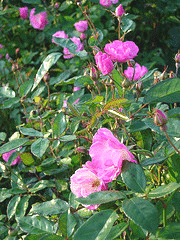
‘La Marne’ grows in such a neat and erect form that it is absolutely perfect for a rose hedge. Blooms are born in large loose clusters nonstop throughout the season. Spring bloom color tends to be much deeper pink, and will be a lighter salmon pink in the heat of summer. In hotter zones it will need some afternoon shade or the bloom color will fade. But excellent disease resistance makes it excellent for the hot and humid climates. ‘La Marne’ is somewhat sensitive to cold, so in zone 5 and 6 some protection may be necessary. This is one of the larger polyanthas, too large for container gardens, but excellent as specimen plants, mixed borders or foundation plantings. It does prefer growing in open sunny areas, and requires very little care.
Polyantha ‘Marie Pavie’
- Class: Shrub rose
- Sun: Full sun, will tolerate partial shade
- Height: 3-4’
- Spread: 3-4’
- Growth Habit: Compact, mounded
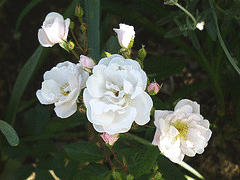
- Bloom Color: Creamy white
- Flower Form: Semi double
- Flower Size: Small, 1 3/4” - 2” in clusters
- Petal Count: 17-25
- Bloom Season: Repeating, spring to frost
- Fragrance: Rich musky fragrance
- Stem: Thornless
- Foliage: Dark green
- Disease Resistance: Good resistance to disease and blackspot
- Soil: Enriched well drained
- Hardiness: zones 5-9
Perfect little pale pink buds open into creamy white blooms with a wonderful fragrance. Warm days release the perfume throughout your garden. In warmer climates the blooms will be quite white, afternoon shade will keep a pink tinge in the blooms. Deadhead to keep the bush looking fresh. This compact and versatile rose is an excellent choice for containers, balcony and patio pots and small gardens. Also creates a wonderful low growing hedge or bedding plant. This is such a vigorous and easy rose to grow, you just can’t go wrong no matter where you plant it. It is reported to also do quite well in zone 10 as well as zone 4, but winter protection is advised. ‘Marie Pavie’ may also be referred to as ‘Marie Pavic’ or ’Marie Parvie’
Polyantha ‘Mrs. R. M. Finch’

- Class: Shrub rose
- Sun: Full sun, will tolerate partial shade
- Height: 2-3’
- Spread: 3-4’
- Growth Habit: Compact, bushy
- Bloom Color: Rose pink
- Flower Form: Semi double
- Flower Size: Small, 1 1/2” - 2”
- Petal Count: 35
- Bloom Season: Rebloooming
- Fragrance: Light fresh fragrance
- Stem: Nearly thornless
- Foliage: Medium green
- Disease Resistance: Good resistance to disease and blackspot
- Soil: Prefers enriched well drained
- Hardiness: zones 6-9

‘Mrs. R. M. Finch’ blooms in flushes repeatedly through the season. Blooms are born in large clusters of fragrant rose pink, that fade as they mature. As with most of the Polyantha roses, ‘Mrs. R. M. Finch’ is a great size for many locations including containers, mixed or shrub borders and masses. With its’ upright growth habit is also a lovely specimen plant and creates a wonderful hedge.
Polyantha ‘Perle d’Or’
- Class: Shrub rose
- Sun: Full sun with afternoon shade
- Height: 3-6’
- Spread: 3’
- Growth Habit: Compact
- Bloom Color: Apricot with pink undertones
- Flower Form: Very full double pom-pom
- Flower Size: Small 2” blooms in large sprays
- Petal Count: 26-40
- Bloom Season: Repeating in frequent flushes
- Fragrance: Strong fragrance
- Stem: Nearly thornless
- Foliage: Glossy medium green
- Disease Resistance: Good resistance to disease and blackspot
- Soil: Prefers enriched well drained, tolerant of many soils.
- Hardiness: zones 6-9b

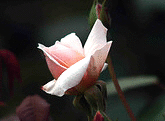
‘Perle d’Or’ produces clusters of tiny perfect buds in apricot peach. The blooms are wonderfully colored with apricot, then fade to buff and finally a golden pink as the bloom matures. The color will hold best if the plant receives afternoon shade. Flushes of blooms occur repeatedly all season. The blooms are strongly perfumed, and the cut flowers can fill an entire room with scent. The plant looks very similar to ‘Cecile Brunner’ except for the bloom color, and is often referred to as the ‘Yellow Cecile Brunner’. The blooms are also a bit larger. than ‘Cecile Brunner’. Requires very little pruning, a little deadheading and prune to maintain size if you like.

Perle d’Or’ is one of the larger polyantha roses. In more northern climates the shrub will be somewhat smaller, and quite a bit larger in the most southern regions. ‘Perle d’Or’ is an EarthKind rose (very hardy and easy to grow), thriving in most soils and conditions and is quite drought tolerant once established. However it does not tolerate salt/saline well. Excellent choice for containers, bedding plants, planted in groups of three or five, or in masses.
Polyantha ‘Pink Pet’

- Class: Shrub rose
- Sun: Full sun
- Height: 3-4’
- Spread: 3-4’
- Growth Habit: Compact
- Bloom Color: Lilac pink
- Flower Form: Double
- Flower Size: Small to Medium,1 1/2” - 2”
- Petal Count: 25-50
- Bloom Season: Repeating
- Fragrance: Little to no fragrance
- Stem: Nearly thornless
- Foliage: Medium green
- Disease Resistance: Good resistance to disease and blackspot
- Soil: Prefers enriched well drained, will tolerate poor soil
- Hardiness: zones 5b-10

‘Pink Pet’ has one of those confusing classifications, but since it is still widely known as a polyantha rose it is listed here. It was originally introduced as a Polyantha, and later changed to a China Rose or Modern Rose. Meanwhile, ‘Caldwell Pink’ existed as a China Rose. They were later determined to be the same rose. With that issue addressed, on to the plant details.
‘Pink Pet’ blooms throughout the season in flushes beginning in late spring and continuing until frost. The blooms are long lasting and born in clusters of 5 to 15, deadheading may improve reblooming. Mature blooms begin to fade, giving the plant the appearance of multiple bloom colors. ‘Pink Pet’ or ‘Caldwell Pink’ is quite tolerant of a variety of soil conditions, but does prefer full sun. It is widely used in Texas, thriving in the heat. But do keep the soil consistently moist until it is well established. The foliage turns gold and burgundy-red in autumn. This is an excellent choice for containers or mass plantings. It is an ‘Earthkind’ rose requiring almost no care.
Polyantha ‘White Pet’
- Class: Shrub rose
- Sun: Full sun, will tolerate partial shade
- Height: 2’
- Spread: 2’
- Growth Habit: Compact, rounded
- Bloom Color: White with lemon centers
- Flower Form: Double pom-pom
- Flower Size: Small, 1 1/2”
- Petal Count: 40-50
- Bloom Season: Continuous
- Fragrance: Slight musky fragrance
- Stem: Nearly thornless
- Foliage: Dark green, shiny
- Disease Resistance: Good resistance to disease and blackspot
- Soil: Prefers enriched well drained, will tolerate poor soil
- Hardiness: zones 6-9
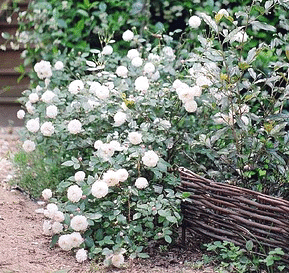
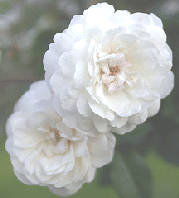
‘White Pet’ blooms profusely with large clusters of double rosettes. The flower buds are a deep rose pink, and open to white or creamy white. This very dwarf polyantha will grow in poor soil conditions including heavy clay, although amending the soil will improve its’ performance. It is very easy to grow and requires little care. ‘White Pet’ is an ideal rose for growing in pots, as a bedding plant, edging plant, or a ground cover. The low growing plant is compact and tidy. For best effect plant in groups. Also known as ‘Little White Pet’